What if I told you, we have the technology to improve connectivity of the internet, reduces the bandwidth required and a faster more responsive interactive experience for high quality video just by changing the way our video server works?
Scroll down to read more!
A snapshot of the test result can be seen in the animated image below:
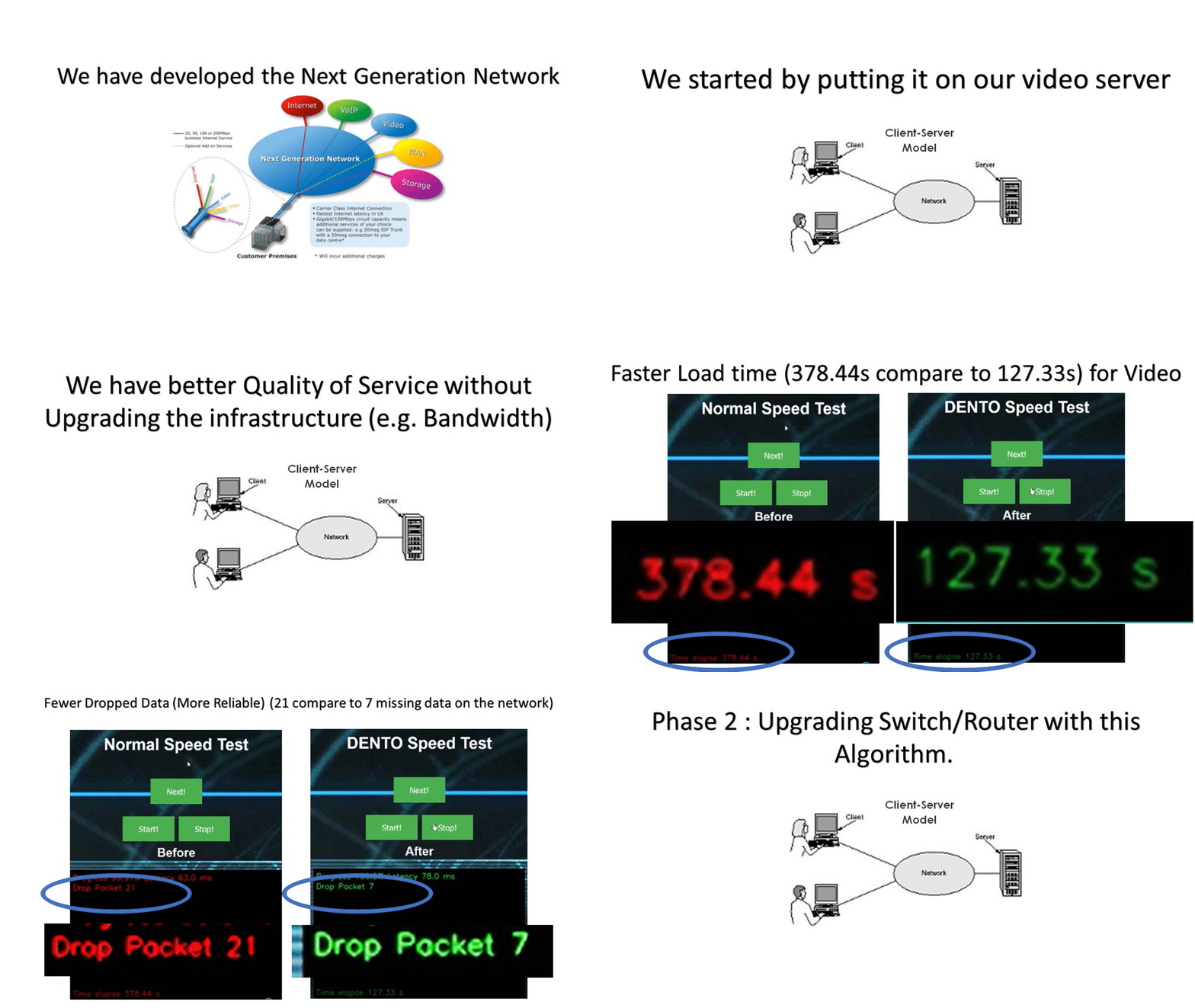

We have developed an algorithm for a video server that provides up to 50% improvement in response time. Simulations have shown an order of magnitude improvement in lowering data latency & jitter whilst almost 100% of the bandwidth can be utilised, unlike current practice. Additional benefits are improved security and resilience to network and equipment vulnerabilities, some of which are inherent. In addition, there is the potential to develop this further. The algorithm will also support the new high bandwidth networks.
The algorithm controls packets to arrive at a defined timeslot, thus minimizing packet jitter. It is not affected by other network traffic loading. The algorithm was invented at the University of Warwick, with a patent being filed, and is currently at Technology Readiness Level 3. We expect to develop this technology into a next generation product in 12 months. The algorithm would take current video streaming services to the next generation with excellent Quality of Service.
Click the button below to see a concept video for DENTO.
Most video servers manage their data delivery service to clients poorly and often a client’s network suffers from high traffic congestion because of this. Currently, video services to the client are only possible when data (packets) in the network are dropped.
This can lead to a number of consequences:
Here is an interactive animation that demostrates what usually happens with video streaming. You'll observe that dropping packets only causes a temporary lull as other packets flood the bandwidth freed.
By Creating a Deterministic transport data algorithm, we have successfully implemented an adaptive solution to reduce the number of drop packets cause by mismanagement of the network, reduce the data needed to successfully carry out a connection and improved the response time between client and server.
A method, processor and system for controlling packet flow in a network provides for selecting a transmission scheme based on a payload rate for payloads arriving at a buffer. The transmission scheme incudes data blocks comprising packets each having an associated payload, the data blocks have a variable packet transmission rate and a variable payload per packet ratio. The product of the variable packet transmission rate and the variable payload per packet ratio remains constant. The data blocks are sent to a network switch that deterministically routes the data blocks.
A link of the patent can be found here!This is demonstrated in the interactive animation below. The network doesn't congest as easily and allows more packets to be transferred.
We are proposing a more active approach in managing and distributing video data over the network.
Likely benefits include:
In the video below, we have designed our video server prototype using the network algorithm. This prototype can currently stream a recorded video live and play the video depending on the network performance. We are expecting a 50% faster run-time with lower delays between the frame in the video as well as fewer dropped packets from the network.
The effects and advantages of Dento can be seen even more clearly when a 4G network is used, as this video shows.
If you would like to collaborate in developing this video service or would like to try out the video server prototype yourself using your Internet Service Provider please contact us using the details below and we will arrange a viewing session with you.
Phone:
+44 (0) 77 1837 6324
Post:
The Venture Centre
University of Warwick Science Park
Sir William Lyons Road
Coventry - CV4 7EZ
United Kingdom
Email:
Tony Mo: tony.mo(at)coventnet.com